


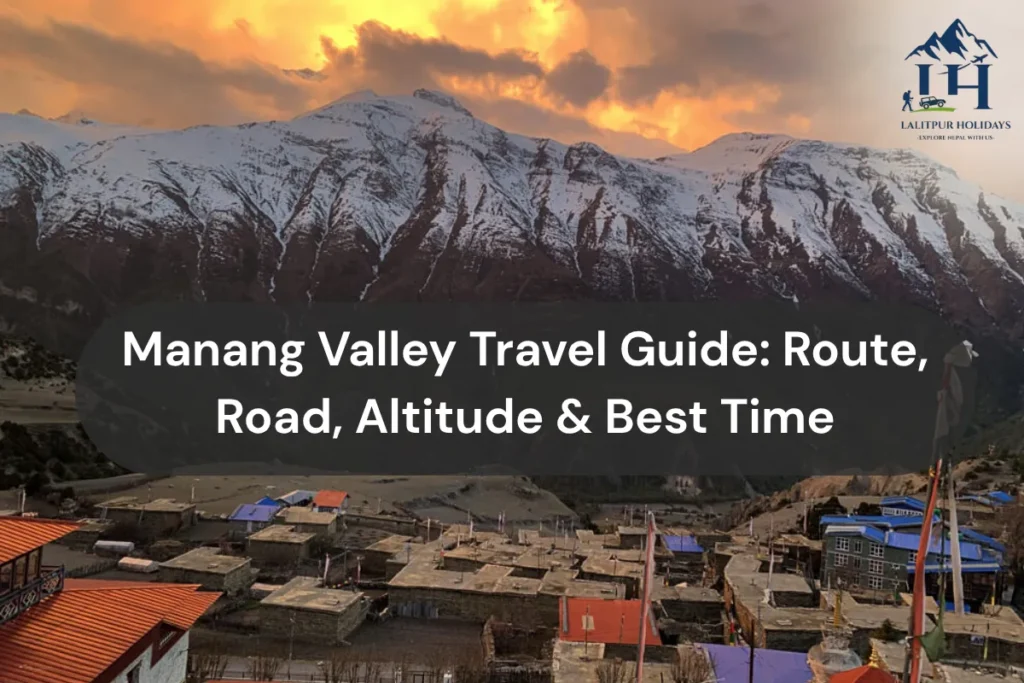
This Manang Valley travel guide explains how to plan a road journey from Kathmandu or Pokhara, what to expect beyond Besisahar, and which places need extra hiking time. A road tour combines driving with local sightseeing, while an Annapurna Circuit trek involves a longer walking itinerary.
Both require altitude planning. Manang Village is about 3,500 m above sea level, and driving there can compress the ascent. Compare overnight stops, driving hours and actual time in the valley before choosing a trip.
Quick Summary
- Where it is: Manang is in the Annapurna region of Gandaki Province, inside the Annapurna Conservation Area.
- Road tour vs trek: A Manang Valley road tour uses a vehicle and adds sightseeing. The Annapurna Circuit is a multi-day walk over Thorong La (5,416 m).
- Altitude: Manang Village is commonly quoted at about 3,500 m. Sources give figures such as 3,519 m and 3,540 m.
- Days needed: A road trip can fit in 3 or 4 days, but 5 or 6 days gives you more real time in the valley.
- Best seasons: Spring (March–May) and autumn (September–November).
- Road and start point: Roads beyond Besisahar are narrow and can close after rain. Starting from Pokhara usually leaves more time in Manang than starting from Kathmandu.
Manang Valley Tour at a Glance
| Factor | Practical Answer |
| Region | Annapurna region, Gandaki Province |
| Main destination | Manang Village and the upper Manang Valley |
| Approximate altitude | About 3,500 m (sources vary between roughly 3,519 m and 3,540 m) |
| Travel style | Jeep/road tour, or trekking on the Annapurna Circuit |
| Main starting points | Kathmandu or Pokhara, usually via Besisahar |
| Typical road-tour duration | 3 to 6 days, depending on start city and pace |
| Best-known seasons | Spring and autumn |
| Main road concern | Narrow, rough sections and landslides, especially after rain |
| Main sights | Manang Village, Gangapurna Lake, Braga/Braka Monastery |
Is a Manang Valley Tour the Same as the Annapurna Circuit Trek?
A Manang Valley road tour uses vehicle access to reach the upper valley, followed by local sightseeing and optional walks.
| Factor | Manang Valley Road Tour | Annapurna Circuit Trek |
| Travel style | Road + sightseeing | Multi-day walking |
| Duration | Shorter (about 3–6 days) | Much longer (often two weeks or more) |
| Walking | Optional and limited | Daily |
| Main focus | Reaching Manang Valley and visiting nearby places | Completing the full circuit |
| Highest elevation | Depends on side trips; Manang Village is about 3,500 m | Thorong La, 5,416 m |
| Physical effort | Lower | Considerably higher |
| Altitude consideration | Still important, because the climb is fast | Central to trek planning |
| Best suited for | Travellers with limited time who prefer road travel | Travellers who want a long walking journey |
Sharing a region does not make two trips the same. On a traditional Annapurna Circuit itinerary, travellers usually gain altitude more gradually over several days. A road tour can bring you to Manang much faster, so the change in elevation is more compressed.
Once that difference is clear, the next question is how much time a road traveller actually needs.
Manang Village, Manang Valley and Manang District: What Is the Difference?
These three names mean different things, and mixing them causes confusion.
- Manang District is the large administrative area. It includes many villages and a wide range of heights, from lower river valleys to high mountain terrain.
- Manang Valley is the broader upper valley setting that travellers usually mean when they say “Manang.”
- Manang Village is the main settlement. This is the place most websites quote at about 3,500 m.
Use the village elevation as your reference when planning a stay in Manang. The valley and district cover a much wider range of elevations. When you plan, use the village as your reference point. Then ask where you will sleep each night, because the overnight altitude matters more than the district name.
How Many Days Are Enough for a Manang Valley Tour?
A short road trip can fit into three or four days. Five or six days gives you more real time in the valley. Starting from Kathmandu usually uses more road time than starting from Pokhara.
3 Days: Very Compressed
A 3-day Manang tour spends most of its time in the vehicle. You reach the valley, see a little and head back. Sightseeing is limited. Altitude gain is also rapid, with little room to rest.
4 Days: Check the Overnight Stops Carefully
Manang road tours are advertised with different durations, but the number of days alone does not establish whether an itinerary is suitable. Check the driving stages, overnight elevations, sightseeing time and return journey.
5–6 Days: Better for a Slower Trip
A longer itinerary can provide more sightseeing time and flexibility for delays. It supports acclimatisation only when the additional time is used to manage the ascent and overnight elevations.
Do Not Judge a Manang Tour by Duration Alone
A four-day package does not mean four days in Manang. Total package days and actual time in Manang are not the same thing.
A four-day trip can sound generous until you see how much of day one and day four is spent on the road. For example, a plan may look like this:
- Day 1: long drive toward the upper valley.
- Day 2: the main sightseeing window in Manang.
- Day 3 and 4: the drive back, with little time to explore.
Before you compare trips, ask for these details:
- Driving hours on each day.
- Where you sleep each night.
- How many hours you will actually spend in Manang.
- How much time is set aside for sightseeing.
- How the altitude rises from night to night.
Two trips with the same number of days can feel completely different. The one with more hours in Manang, or a gentler climb, is usually the better plan.
Duration alone does not answer the question, because the starting city changes how much time is spent driving.
Should You Start the Manang Tour from Kathmandu or Pokhara?
Start from the city that fits your wider travel plans. Both approaches connect through Besisahar, but the time available in Manang depends on traffic, departure time, overnight stops and the complete itinerary.
| Factor | Kathmandu Start | Pokhara Start |
| Overall journey | Longer; a highway stage comes first | Shorter run to the Besisahar corridor |
| Road time | More | Generally less |
| Suitable trip length | 5 days or more is more comfortable | 4 days can work |
| Short-itinerary practicality | More compressed | More practical |
| Main planning consideration | Highway time plus the mountain road | The mountain road stage |
| Potential destination time | Lower on a short plan | Higher on the same plan |
A four-day trip from Kathmandu and a four-day trip from Pokhara do not provide the same amount of time in Manang. The Kathmandu traveller spends more of the schedule on the lower road. The Pokhara traveller keeps more of it for Manang Village, Gangapurna Lake and local walks.
We have not listed hard driving times here. Times change with traffic, repairs and weather, so confirm the current figure with your operator before you book.
What Is the Road Route to Manang?
The road to Manang runs in stages, not as one simple distance. Both Kathmandu and Pokhara routes join the same mountain road at Besisahar.
Route in stages:
Kathmandu / Pokhara → Besisahar → upper Marsyangdi river corridor → Dharapani / Chame → Pisang / Braga area → Manang
- Kathmandu or Pokhara to Besisahar. This is the lower approach. It uses highway and paved roads for much of the way.
- Besisahar to Chame. This is the long mountain stage along the Marsyangdi River.
- Chame to Pisang and the Braga area. The valley opens up and the air gets thinner.
- On to Manang. You arrive in the upper valley at about 3,500 m.
If you take public transport instead of a private Jeep, expect less predictability on the upper stages. Kathmandu to Manang by bus usually means a bus to Besisahar, then a different vehicle onward. Pokhara to Manang by Jeep follows the same upper road. Check current schedules before you travel.
Knowing the route is useful, but the road itself is just as important.
What Is the Road Condition to Manang?
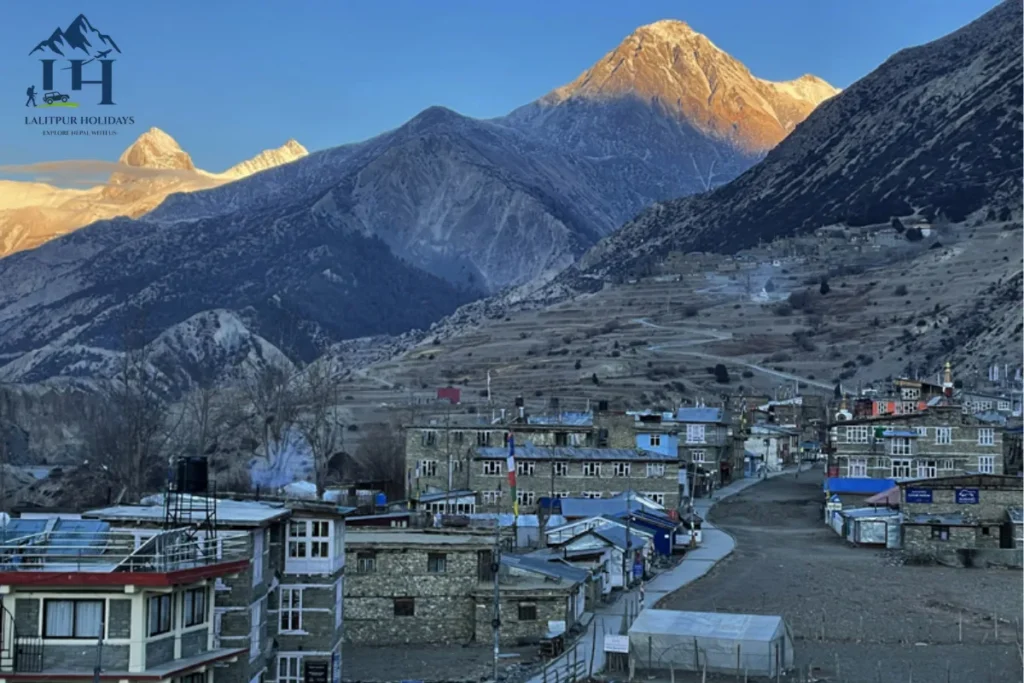
The road to Manang changes from section to section. It is not one road with one condition. Six hours on a smooth highway and six hours on a rough mountain road are not the same travel experience.
Lower Approach to Besisahar
This part is the easiest. It uses main roads and highway, so travel is faster and more predictable. Delays here usually come from traffic or roadworks.
Besisahar Toward Chame
This is the hardest stage for many travellers. The Department of Roads lists the Besisahar–Ghermu, Ghermu–Sattale and Sattale–Chame sections as earthen road. The road is narrow and cut into steep rock above the Marsyangdi River. Rain can bring landslides and block it fully.
Landslides and road repairs can interrupt access along this corridor. Check a dated update for the sections you will use before departure.
Chame Toward Upper Manang
Above Chame, the road continues toward Pisang and Manang. Conditions here depend on the season, on snow and on recent maintenance. Expect slower driving and cold mornings.
Why it matters. Road condition affects which vehicle you need, how fast you can go, how tired you feel and how reliable your schedule is. A bad stretch can turn a plan with no spare time into a plan that fails.
Freshness note: Road conditions can change after rainfall, landslides, maintenance or snow. Confirm the current route before departure.
Do You Need a Jeep or 4WD for Manang?
High-clearance 4WD vehicles are commonly used on the upper road. Suitability depends on current surfaces, weather, vehicle condition and the driver’s experience on the route.
Confirm the vehicle’s seating capacity, luggage space and maintenance condition before booking. A vehicle model name alone does not establish comfort or suitability.
Can you reach Manang by car? Manang is accessible by road, but vehicle suitability depends on current conditions. High-clearance 4WD vehicles are commonly used for the upper route because rough surfaces, loose stone, mud and seasonal damage can make standard low-clearance cars impractical.
How High Is Manang and Why Does Altitude Matter on a Road Tour?
Manang Village is commonly listed at approximately 3,500 m, or about 11,500 ft. Published figures vary slightly. For itinerary planning, confirm the elevation of each overnight stop rather than relying only on the destination’s quoted height.
Driving reduces walking, but it does not reduce Manang’s altitude.A trekker following a gradual itinerary usually gains elevation over several days, while a road traveller may reach Manang much faster. A road traveller can climb thousands of metres in a day or two. That means less natural acclimatization.
In practice, this changes how you plan:
Plan a gradual increase in sleeping elevation before reaching Manang. Keep activities light on arrival, but do not treat an easy evening or drinking water as substitutes for acclimatisation.
Tell your guide promptly if you develop headache, nausea, dizziness or unusual fatigue. Do not continue to a higher elevation while experiencing altitude symptoms. Worsening symptoms require descent and medical assessment.
People react to altitude in different ways, and fitness does not predict it. If you feel unwell, tell your guide or driver early. For health advice, including medicines for altitude, speak to a doctor before you travel.
Once you know how long to stay and how the altitude affects the trip, you can decide what is realistic to see.
What Are the Best Places to Visit in Manang?
The best places to visit in Manang are the ones you can reach without a long hike: Manang Village, Gangapurna Lake and Braga/Braka Monastery. Other places on “things to do” lists need more time and effort, so this guide sorts them by how hard they are.
Local Sightseeing and Short Walks
Manang Village. This is the main settlement and your base. It has lodges, shops and cafes, plus stone houses with flat roofs. Explore at a comfortable pace, allowing for the altitude and how you feel after arrival.
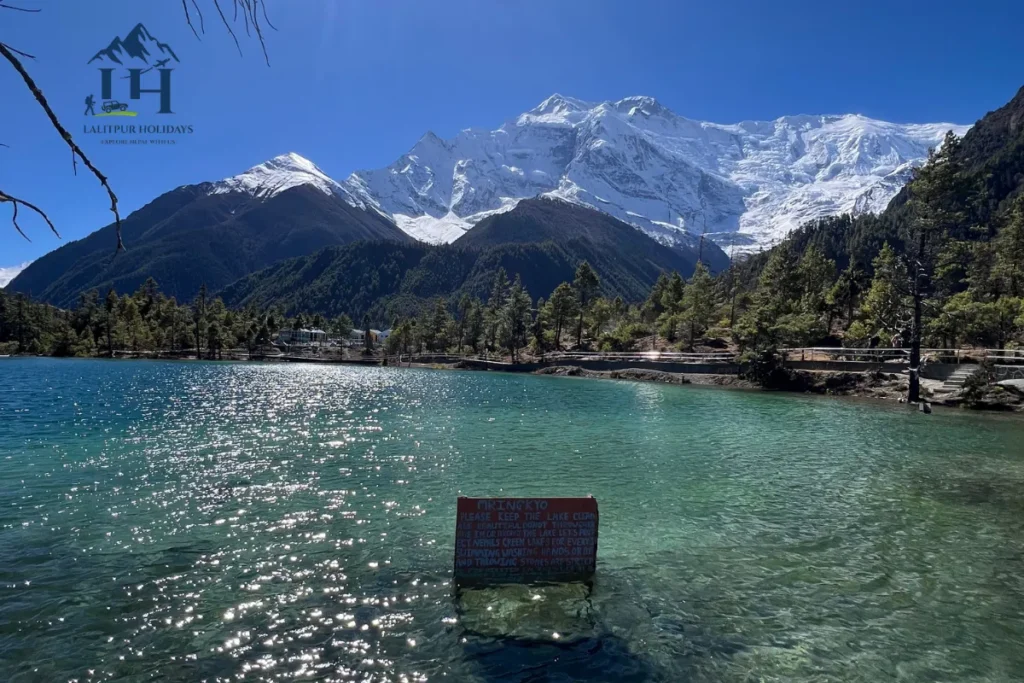
Gangapurna Lake and viewpoint. A glacial lake close to the village, below the Gangapurna peak.The walk is relatively short compared with Manang’s higher acclimatization hikes, although the altitude can still make it feel slower than expected.
Braga / Braka Monastery. Spellings vary, so you will see both. It is an old Buddhist monastery in the village of Braga, a short distance from Manang Village. Visitors usually climb a path and some steps. Allow for the uphill approach and confirm visitor access locally and gives a sense of local Buddhist culture and Manangi traditions.
Local cultural sites and museum. Manang has small cultural spots, including a local museum in the area. Opening times and exhibits can change, so ask in the village. These are low-effort stops and good for a rest day.
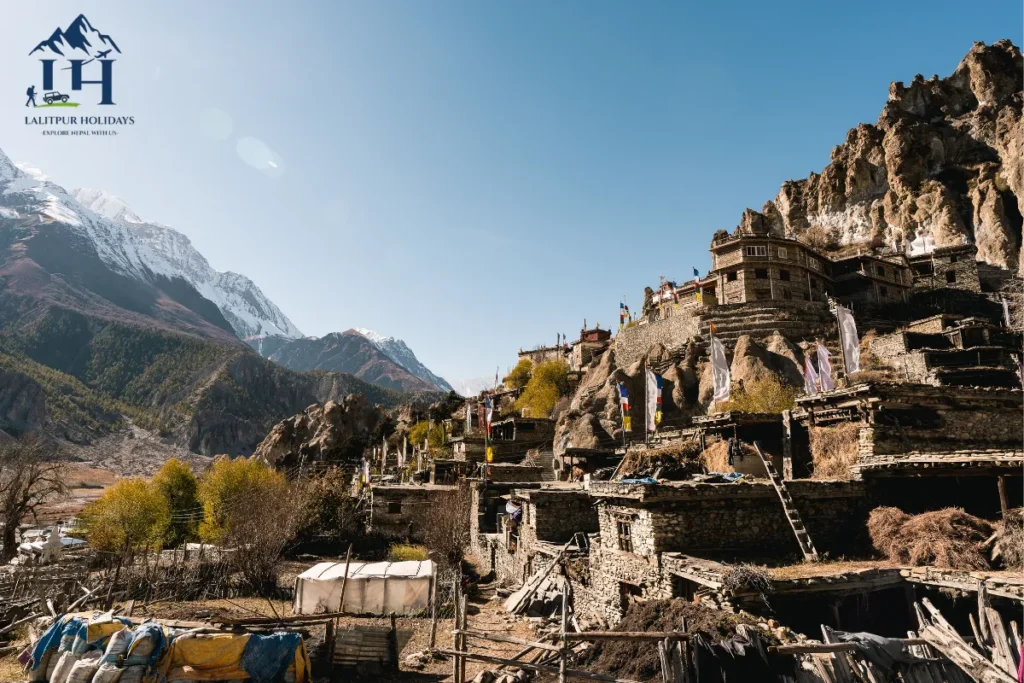
Which Manang Attractions Need Extra Hiking Time?
Not every attraction near Manang is ordinary sightseeing. Some need extra hours, steep climbing and more energy at high altitude.
Chongkor Viewpoint
A shorter optional walk that gives wide views over the valley. It is uphill, so take your time.
Praken Gompa
An optional uphill outing to a small gompa above the village. It needs more energy than Gangapurna Lake. Plan it for a morning with no other big activity.
Milarepa Cave
This cave is linked to the Buddhist teacher Milarepa. It needs extra time and walking, and the effort depends on which approach you take. Ask a local guide before you decide.
Ice Lake (Kicho Tal)
Ice Lake, also called Kicho Tal, is a demanding high-altitude hike rather than a routine sightseeing stop. Plan it separately from the basic road-tour programme, with enough time for acclimatisation, the ascent and the return.
An extra day alone does not make the hike suitable. Confirm the route, conditions and ascent plan with your guide before including it.
Is Tilicho Lake Part of a Manang Valley Tour?
Not usually. Tilicho Lake is a separate trekking commitment, not a roadside stop.
Manang is a common starting point for the Tilicho trek. However, the lake needs extra walking days and its own altitude planning.
If Tilicho is on your list, treat it as a trek that begins in Manang. A road tour can still be a good way to see the valley first.
What Is the Best Time to Visit Manang?
The best time to visit Manang is spring (March to May) or autumn (September to November). These seasons usually bring clearer skies and steadier travel. Autumn, especially October, can be particularly busy, so book lodges early.
Spring — March to May
Days warm up and snow melts from the lower stretches. Views are often clear, and the valley is lively. Mornings and nights stay cold at this height.
Autumn — September to November
This is the most popular time. Skies are usually clear, and October is especially busy. Early autumn can still have rain left over from the monsoon, as 2026 showed. Landslides blocked the road in September and October.
Monsoon — June to August
Manang may lie in a rain-shadow environment, but the access road does not automatically share the same dry conditions. The valley itself can be drier than the hills below. The road through the Marsyangdi gorge is not. Rain can bring landslides and long delays, and 2026 saw several closures. If you travel in these months, add spare days and watch the weather.
Winter — December to February
Winter is cold, with snow possible on the road and in the village. Some lodges and services may close. Even so, winter travel is not impossible. It simply needs more checking, warmer gear and a flexible plan. Snow can also arrive early in late autumn or linger into early spring.
Those sightseeing options also change with the season, so plan your walks around the weather.
Where Should You Stay in Manang?
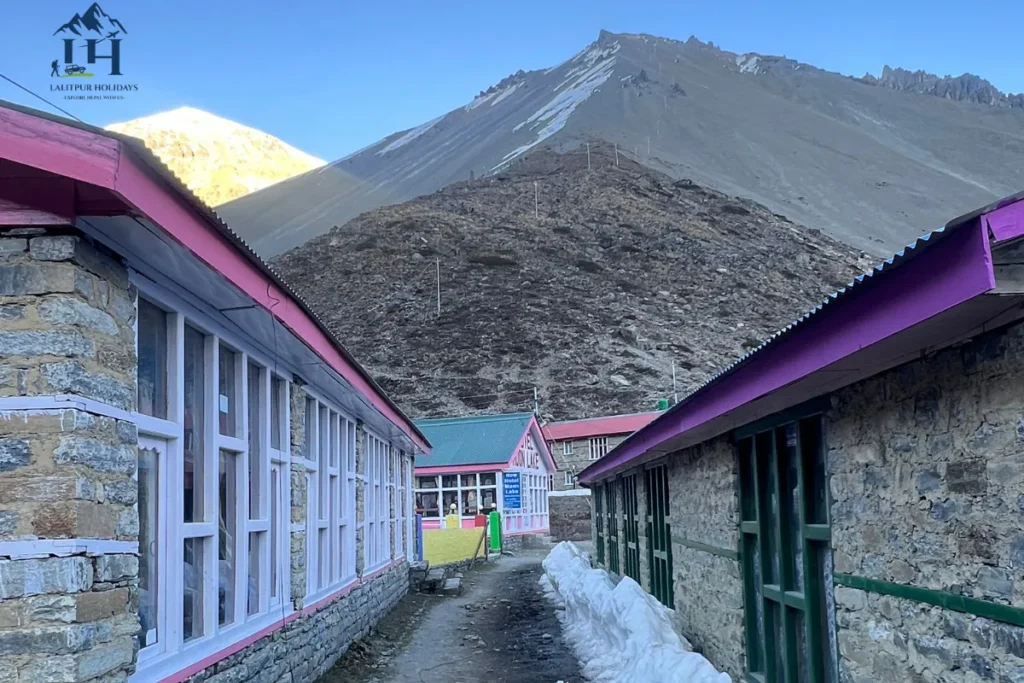
You can stay in teahouses, lodges and guesthouses. Manang Village has the widest choice on this route. Rooms range from basic to better equipped.
Here is what to expect:
- Basic teahouses: simple rooms, shared bathrooms, a warm dining room.
- Lodges and guesthouses: more comfortable rooms, some with attached bathrooms.
- Heating: rooms are often unheated, so a warm sleeping bag or extra blankets help. Dining halls are usually the warm place.
- Hot water: often available, sometimes for a fee, and not always reliable in winter.
- Charging and Wi-Fi: available in many places, usually paid and slower than in cities.
- Seasonal availability: Accommodation availability can become more limited outside the main travel seasons, especially in winter, so confirm that your intended lodge is operating.
Food is mostly simple. Expect dal bhat, noodles, soups, bread and tea. Local specialities may include yak products, so ask what is available.
Do You Need Permits for a Manang Valley Tour?
Manang lies within the Annapurna Conservation Area. Check the applicable entry-permit requirements through NTNC, including the rules for your nationality.
Trekking requirements are separate from conservation-area entry. Nepal Tourism Board lists the Annapurna Circuit under its TIMS and licensed-guide provisions. If your trip combines road travel and hiking, confirm which requirements apply to the complete itinerary before departure.
Is Manang Suitable for Families or First-Time Visitors?
Manang can work for families and first-time visitors, but it is not right for everyone. The long drives, rough roads, cold and altitude all need thought.
Long vehicle days can be tiring, especially for young children and older travellers. Bumpy roads can cause motion sickness. Nights can be cold, and lodging is simple. Altitude affects people differently, and age or fitness does not predict who will struggle.
A slower itinerary gives the group more rest time and reduces the pressure to combine long road days with sightseeing. Choose overnight stops and daily driving stages around the group’s needs; additional days are useful only when the itinerary uses them appropriately. Choose easy sightseeing, such as Manang Village and Gangapurna Lake, and skip big hikes. If anyone has a heart, lung or other health issue, or is pregnant, ask a doctor before booking.
What Should You Pack for a Manang Road Tour?
Pack for cold, dust and long hours in a vehicle, not for a trek:
- Warm layers, including a fleece and a down jacket.
- A windproof and waterproof outer layer.
- Sunglasses and sun protection, because the sun is strong at altitude.
- Comfortable walking shoes.
- Water and snacks for the road.
- Personal medicine, including motion-sickness tablets if you need them.
- A dust scarf or mask for the dry sections.
- A power bank, since charging may be limited.
- A light daypack.
You do not need heavy trekking gear for a road trip, unless you plan a long hike.
What Should You Check Before Leaving for Manang?
Use this list a few days before you go, and again the day before:
- Current road condition from Besisahar to Chame and beyond.
- Your starting city, and the total driving hours.
- Vehicle type and driver experience on this route.
- Overnight stops and their altitudes.
- Actual time you will spend in Manang.
- How your altitude rises from night to night.
- The weather forecast for the valley and the road.
- Accommodation, including heating and winter availability.
- Which permits apply to your itinerary.
- Any optional hikes, and whether you have the days for them.
- A backup or spare day in case the road closes.
Frequently Asked Questions About Manang Valley Tour
How many days are enough for Manang?
Three to four days is enough for a basic road trip, but five or six days is better. Starting from Kathmandu uses more road time than starting from Pokhara. A longer plan gives you more hours in Manang and a spare day for delays.
Can you reach Manang by car?
Yes, Manang can be reached by road, but not every car is suitable. Most trips use high-clearance 4WD Jeeps because the road beyond Besisahar is narrow and rough. Rain and landslides can close it, so check current conditions before you go.
How do you reach Manang from Kathmandu?
You drive to Besisahar, then continue on the mountain road through Chame and Pisang to Manang. This is the longer start, so a short trip feels tight. Most travellers use a private Jeep. Check public transport schedules if you go by bus.
How do you reach Manang from Pokhara?
You drive to Besisahar and then take the same upper road to Manang. The lower stretch is shorter than from Kathmandu, so a four-day plan has more time in the valley. Confirm the current driving time and road status with your operator.
What is the altitude of Manang?
Manang Village is at about 3,500 m (roughly 11,500 ft). Sources quote 3,519 m and 3,540 m because they measure slightly different points. The whole district is not at one height. Plan around the village and your overnight stops.
Which month is best for Manang?
October is the most popular month, and April and May are strong choices too. Spring and autumn usually have clearer skies. October is busy, so book early. The monsoon and winter can work, but they need more flexibility.
Is Manang worth visiting without trekking the Annapurna Circuit?
Yes, if you want the valley, the monastery and the lake without weeks of walking. A road trip shows you Manang Village, Gangapurna Lake and Braga/Braka. It does not give the long trekking experience, so choose based on your time and goals.
Can you visit Ice Lake on a short Manang tour?
Not comfortably on most short road tours. Ice Lake is a full-day high-altitude hike above Manang Village, so it needs additional time and appropriate acclimatization. It should be planned as an optional hiking day rather than squeezed into a basic 3- or 4-day road tour.
Is Tilicho Lake included in a normal Manang Valley tour?
No. Tilicho Lake needs a separate trek of several extra days from Manang.
How Should You Plan Your Manang Valley Tour?
Start with your starting city, then count your days. If you begin in Kathmandu, allow more time than someone starting in Pokhara. Next, ask how many hours you will spend driving and how many you will actually spend in Manang.
Then think about altitude. If you drive up quickly, plan an easy first evening and keep your sightseeing simple. Choose Gangapurna Lake and Braga/Braka if you have a few days. Add Ice Lake only if you can spare extra time. Treat Tilicho as a separate trek.
Finally, build in a spare day for road delays and check current conditions before you leave. Travellers who have decided that a road-based trip suits them can review Lalitpur Holidays’ current Manang Tour Package for route, duration, vehicle and inclusion details.
