 Babarmahal-11, Kathmandu (Near King's College)
 9869730777 | 9709139250 | 9709139260
 lalitpurholidays@gmail.com
 WhatsApp




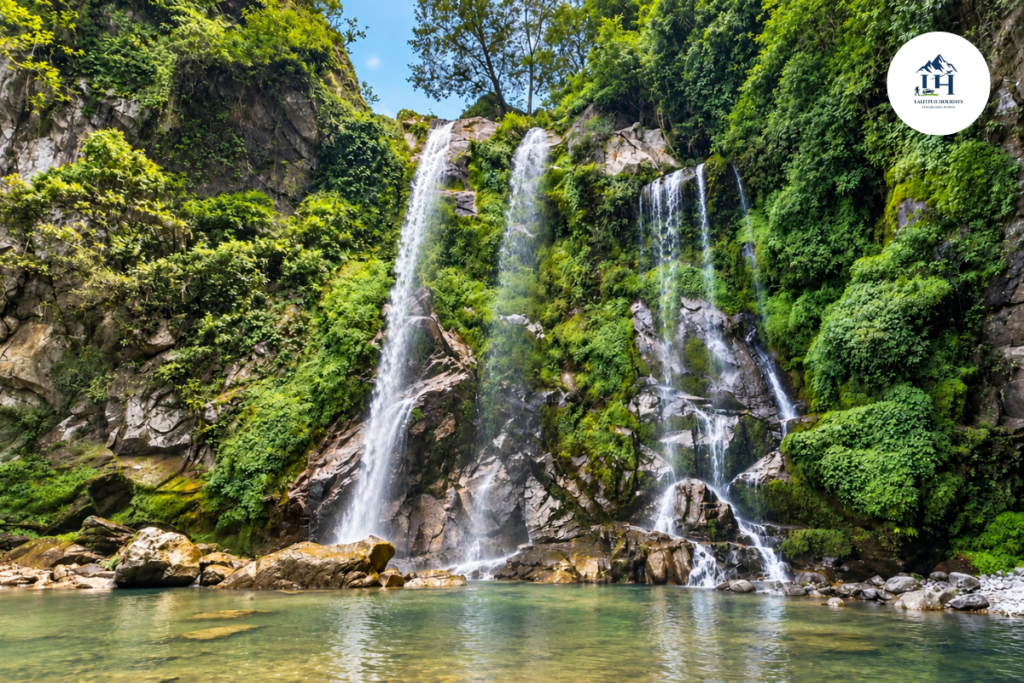
The best waterfalls near Kathmandu make very different day trips. Some need a short walk. Others take most of your day. Jhor suits easier access. Sundarijal and Bishnudwar suit people who want to hike. Lauke, Simba Falls and Tindhare mix road travel, village scenery and walking in different ways.
Not every waterfall called “near Kathmandu” is equally practical for one day. The right pick depends on your time, your legs and the season. This guide compares waterfalls by day-trip practicality rather than simply ranking them by appearance.
Lalitpur Holidays organises day trips and waterfall hikes around Kathmandu Valley, so this guide focuses on the details that matter when planning a real outing: access, walking effort, season and total travel time.
Best Waterfalls Near Kathmandu at a Glance
| Waterfall | Area | Travel Style | Walking / Hiking | Difficulty | Best For | Seasonal Note |
| Jhor | Tokha, north Kathmandu | Short drive, then a short walk | Short final walk | Easy | Casual visitors, a shorter outing | Path to the shrine gets slippery in rain |
| Sundarijal | Sundarijal, edge of Shivapuri Nagarjun National Park | Drive, then a trail with steps | Reported 30–60 minutes from the village; longer if you go on into the forest | Moderate | Waterfall plus hiking | Fullest in rainy months; steps and moss get slick |
| Lauke | Nuwakot, Kakani side | Long road journey, then a walk | Varies with where the vehicle stops; some group hikes last several hours | Easy to moderate | A village and forest nature day | Trails turn muddy in monsoon |
| Bishnudwar | Shivapuri forest, usually from Budhanilkantha | Short drive to the park gate, then a forest hike | Longer forest walk | Moderate | Hikers | Mud and leeches are common in monsoon |
| Simba Falls | Manikhel, Mahankal, Lalitpur | Long, rough road, then a walk | Walk varies; reports range from about 1 to 3 hours | Moderate to hard | A full, early-start rural day | Slippery trail; road can worsen after heavy rain |
| Tindhare Jharana | Kafaldanda, Roshi, Kavre | Long road journey, then a walk | Reported 30 minutes to about 2 hours, depending on where you start | Moderate | A longer scenic day | Rough, muddy road in rain |
What Makes a Waterfall Suitable for a Kathmandu Day Trip?
“Near Kathmandu” should not mean distance alone. A waterfall 15 km away can take longer to reach than one 30 km away if the road is rough or the trail is steep.
So this guide looks at seven things: the road journey, road condition, walking time, hiking difficulty, time at the waterfall, daylight for the return trip, and seasonal access. It keeps only waterfalls that make sense for one day from Kathmandu, even if that means a shorter list.
Each waterfall also answers the same six questions. Where is it? What type of trip is it? How much walking is involved? How hard is it? When does it work best? Who is it for? We give approximate ranges only where reports roughly agree, and we say so when they do not.
Best Waterfalls Near Kathmandu for a Day Trip
Jhor Waterfall — Best for Easy Access and a Shorter Outing
Jhor Waterfall is one of the more practical choices for travellers who want a waterfall visit without a long hike. It lies on the northern side of Kathmandu near Tokha, and road access brings visitors relatively close to the falls. The final approach involves only a short walk compared with the hiking-focused options in this guide.
A road brings you close, and the final stretch is a short walk. A stream from Shivapuri feeds the falls. Reports also mention a Shiva cave temple nearby, a children’s park and a zipline. Because of this, weekends and temple days (reportedly Saturdays and Mondays) can feel busy.
In comparison with Sundarijal, Jhor asks far less from your legs. Rain changes that a little. The path to the shrine is narrow, and one local report calls it slimy and steep in monsoon.
Best for: casual visitors, a shorter outing, and people who do not want a long hike.
Check first: where vehicles can park now, any fees, and the road and path after rain.
Sundarijal Waterfall — Best for Travellers Who Want a Hike
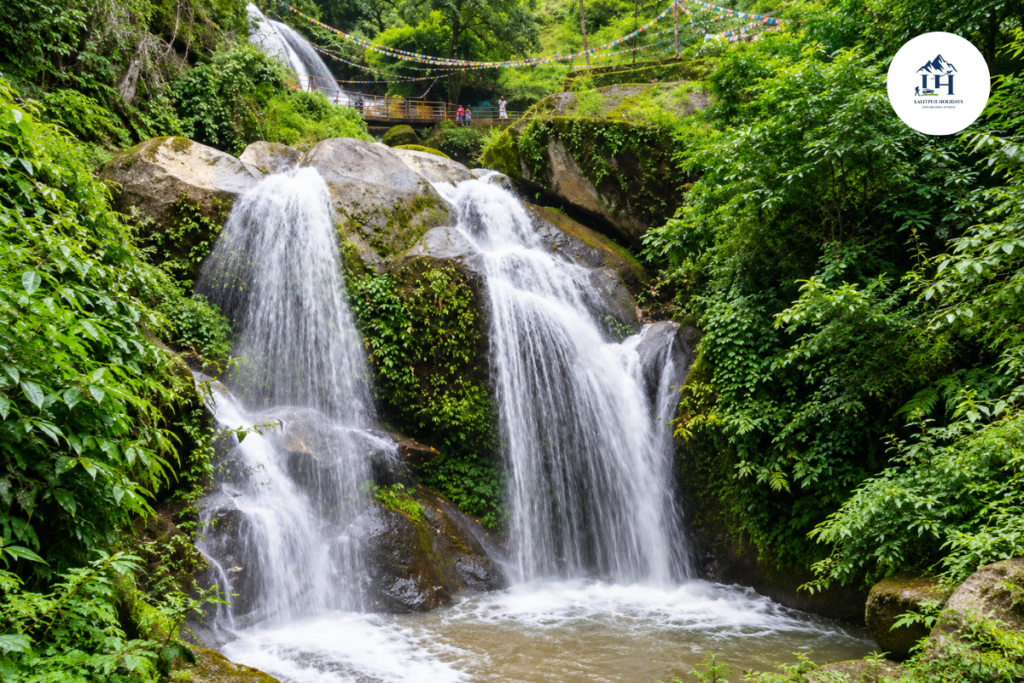
Sundarijal lies on the edge of Shivapuri Nagarjun National Park. From the settlement, the route follows steps and a rising trail toward the waterfall. You can keep the outing relatively short or continue farther into the forest toward places such as Mulkharka and Chisapani.
The forest section needs a park ticket. Published fees differ from source to source, so check the booth for current prices.
The falls look fullest in the rainy months. Trails are often drier in autumn and winter, although water flow may be lower at some waterfalls. Steps and moss get slippery when wet, so enjoy the water from a safe distance. Groups with young children should take extra care.
Best for: hikers and people who like forest trails.
Sundarijal is also relevant for travellers. If you prefer an organised hiking day, you can also explore Lalitpur Holidays’ waterfall hikes near Kathmandu.
Lauke Waterfall — A Nature Day Trip Around the Kakani Side
Lauke Waterfall combines a road journey toward the Kakani/Nuwakot side with a final nature walk. Some people also call it Lauke Jharana or Chhahare Jharana.
Walking time varies because road access and vehicle stopping points can change. Some approaches involve a much longer walk than others, so there is no single reliable hiking time for Lauke. Check the current road and final vehicle access before setting out.
The setting is rural. You pass villages, farmland and forest paths. One group’s bus took about two hours just to reach Kakani, so start early. Rain makes the trail muddy.
Do not mix Lauke up with other Nuwakot falls, such as Fungfunge. That is a separate waterfall with its own approach.
Best for: travellers who enjoy village scenery and a longer, flexible walk.
Bishnudwar Waterfall — Best for a Longer Forest Walk
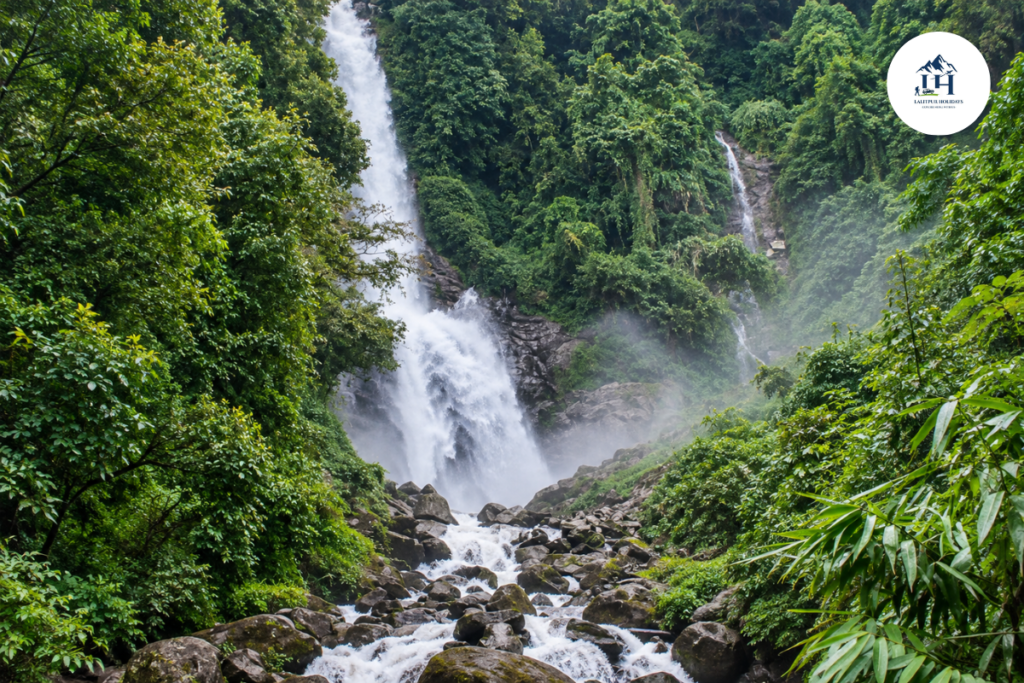
Bishnudwar is better suited to travellers who want a longer forest hike rather than a quick waterfall stop. It lies inside Shivapuri Nagarjun National Park. Local accounts describe it as a source of the Bishnumati River, with links to Lord Vishnu.
Most visitors approach Bishnudwar from the Budhanilkantha side and continue through forest inside Shivapuri Nagarjun National Park. The route involves considerably more walking than Jhor, so treat it as a proper forest hike rather than a quick waterfall stop.
By contrast, Jhor is a waterfall first. Bishnudwar is a hike first. Buy your park ticket at the gate, and check current rules, because prices and entry points can vary.
In monsoon, expect mud and leeches on forest trails. Bring shoes with real grip.
Best for: hikers who are comfortable with forest trails and want a full morning outdoors.
Simba Falls — A Lalitpur-Side Waterfall Day Trip
Simba Falls lies around the Manikhel area of Mahankal Rural Municipality in Lalitpur. Reaching it usually involves a longer road journey followed by walking, so it works better as an early-start full-day outing than a short visit. Road and trail conditions can change after heavy rain, so check current access before leaving.
Be realistic about time. Several hiking reports describe a bumpy road journey of around four hours toward Manikhel. After that, the walk to the falls takes about one to three hours, with steps and a river crossing on some routes.
Because of this, Simba works as a full day with an early start. The trail is slippery in rain. Floods hit the Manikhel area in September 2024, so ask about the road before you leave. Some visitors who used public transport suggested staying overnight.
Best for: hikers who accept a long, bumpy drive in return for a quiet, forested day.
Tindhare Jharana — A Longer Scenic Day Trip
Tindhare Jharana lies in the Roshi area of Kavrepalanchok and requires a much longer road journey than the closer Kathmandu Valley waterfalls. Final walking time can vary with the road and where a vehicle can stop. Treat it as a long scenic day trip, and check road conditions carefully during the rainy season.
Do not expect Jhor’s convenience. Rain usually increases waterfall flow and makes the surrounding hills greener. At the same time, wet weather can bring mud, slippery steps and rocks, stronger currents and poorer road conditions on some approaches.
Best for: travellers who want a scenic road day and accept long travel time.
Which Waterfall Near Kathmandu Should You Choose?
The best option depends on how much driving and walking you want. No waterfall here suits everyone.
| If You Want… | Consider… | Why |
| Easy access | Jhor | Short final walk, close to Tokha |
| Waterfall plus hiking | Sundarijal | Trail and waterfall together, and you can extend it |
| A longer forest walk | Bishnudwar | Forest trail inside Shivapuri, more effort |
| Kakani-side nature | Lauke | Rural road, village scenery and a flexible walk |
| A Lalitpur-side trip | Simba Falls | A different side of the valley, forested cascades |
| A longer scenic day | Tindhare | Long drive and a big drop, but a very long day |
Short on time? Start with Jhor or Sundarijal. Want a full day outdoors? Choose Bishnudwar or Lauke. Ready for a long drive? Consider Simba or Tindhare.
When Is the Best Time to Visit Waterfalls Near Kathmandu?
Waterfalls around Kathmandu usually carry more water during and soon after the rainy season. However, stronger flow also brings wetter roads, slippery trails and stronger currents. So the best time depends on what you want: full water, easy walking, or a mix of both.
Spring and Early Summer
Warmer weather arrives from March. Pre-monsoon flow varies by year and by waterfall, so do not count on a full cascade. In return, trails are often drier and easier to walk. Start early, because afternoon heat and sudden storms can build up.
Monsoon
Rain feeds the falls and turns the hills green. Sundarijal is said to look fullest from June to August, and Tindhare’s flow is strongest then too.
But the same rain brings mud, slippery steps and rocks, and stronger water. Roads to farther places can worsen. Forest trails may have leeches.
The strongest waterfall flow is not automatically the easiest or safest time to visit. Shorter-access waterfalls may be easier to plan in wet weather, but heavy rain can make any waterfall visit less practical. Check recent road, trail, rainfall and water conditions before leaving. Simba, Tindhare and Lauke may be more practical during a drier spell when approach roads are better.
Autumn and Winter
Trails are often drier and skies clearer. Water flow may be lower at some sites. One hiker found Sundarijal weaker in the dry season. Waterfalls change from year to year, so check recent photos with dates. Higher places, such as Manikhel at about 2,000 metres, feel cold in winter.
What Should You Check Before a Waterfall Day Trip?
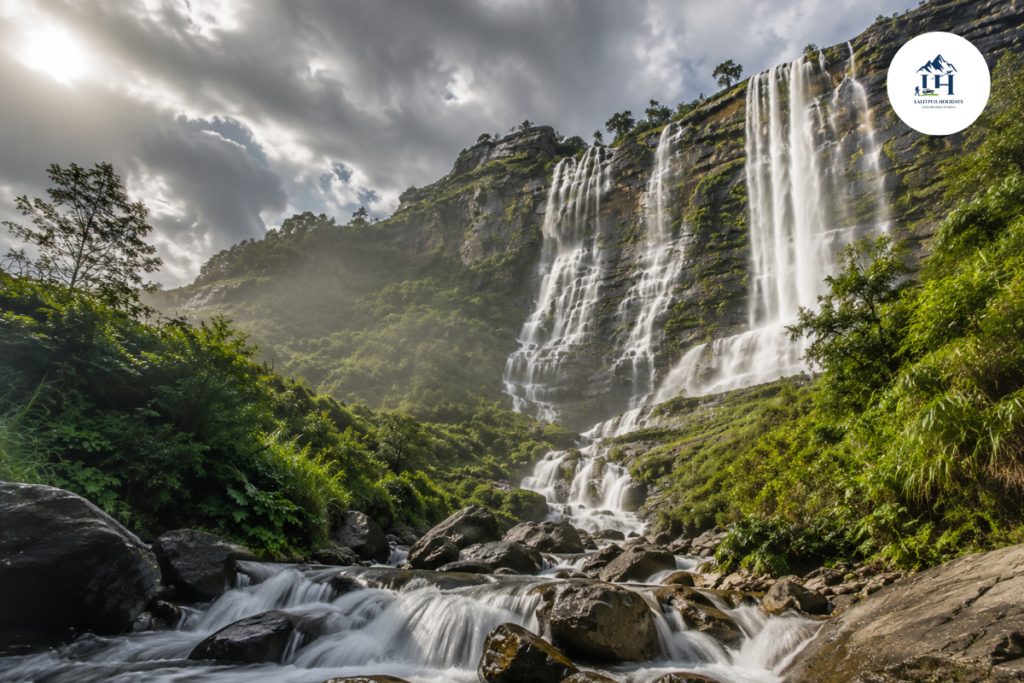
Check recent rain before leaving. Heavy rain can change both trail and road conditions.
- Road access. Ask a driver or local about the current road, especially for Lauke, Simba and Tindhare.
- Trail condition. Expect wet steps, mud and slippery rocks after rain.
- Weather. Look at the forecast for the morning and afternoon.
- Water level. Stay back from fast water.
- Entry rules. Ask about park tickets and fees at the gate. Published prices differ.
- Transport. Plan how you will get back. Public transport to remote places can be limited.
- Return timing. Leave early and set a turnaround time. Do not walk out in the dark.
- Food and water. Carry both. Facilities can be limited.
- Footwear. Wear shoes with grip, not flat sandals.
- Phone and basics. Charge your phone. Carry cash, a rain layer and a small first-aid kit.
Can You Swim at Waterfalls Near Kathmandu?
Swimming conditions vary by waterfall, season and recent rainfall. Do not assume any waterfall is safe for swimming.
Pool depth can change from year to year. Currents can strengthen fast after rain. Rocks and moss stay slippery. Older photos and reviews do not prove today’s conditions.
Follow local signs and advice. If you are unsure, enjoy the view from the bank. Wading near a waterfall’s base is different from swimming, and it still needs care.
Want a Waterfall Hike Near Kathmandu?
Choosing the waterfall is only part of the plan. If you would rather have help choosing a suitable route and organising your day, Lalitpur Holidays offers waterfall hiking and day-trip options around Kathmandu Valley.
Explore Waterfall Hikes Near Kathmandu →
Frequently Asked Questions About Waterfalls Near Kathmandu
Which waterfall is closest to Kathmandu?
It depends on where you start. From north Kathmandu, Jhor and Sundarijal are usually the nearest by road. Simba and Tindhare are far longer drives. Traffic changes real travel time more than distance, so check a live map before you leave.
What is the easiest waterfall near Kathmandu to visit?
Among the waterfalls in this guide, Jhor is one of the easier options because the final walk is relatively short. It sits close to Tokha, and does not need a forest hike. Rain can still make the path to the shrine slippery, so wear shoes with grip and check conditions first.
Which waterfall near Kathmandu is good for hiking?
It depends on the hike you want. Sundarijal gives a trail-and-waterfall walk that you can keep short or extend into Shivapuri forest. Bishnudwar asks for a longer forest walk from Budhanilkantha. Neither is the best choice for everyone.
Can you visit waterfalls near Kathmandu during monsoon?
Yes, if conditions allow. Rain makes the falls fuller and greener, but trails turn muddy and slippery, and rural roads can worsen. Choose shorter routes on rainy days, keep away from fast water, and check recent rain before leaving.
Which waterfall is suitable for a one-day trip from Kathmandu?
Several work well as day trips from Kathmandu. Jhor and Sundarijal fit a shorter day, while Bishnudwar and Lauke involve more walking. Simba and Tindhare usually need an earlier start.
Do you need a guide for waterfall hikes near Kathmandu?
Not always. Jhor is simple for most people. On longer or less familiar routes, such as Lauke, Bishnudwar or Simba, current route knowledge helps, especially after rain. A local guide or an experienced driver can help, but the choice is yours.
What should you carry for a waterfall day trip?
Carry drinking water, snacks, a rain jacket, shoes with good grip, a charged phone, some cash and a small first-aid kit. In monsoon, add spare socks and leech protection for forest trails.
Which Kathmandu Waterfall Day Trip Is Right for You?
There is no single best waterfall for every traveller. Jhor works when easy access matters. Sundarijal gives you a waterfall and a hike together. Bishnudwar suits people who want longer forest walking. Lauke offers Kakani-side nature, and Simba gives you a Lalitpur-side option. Tindhare fits travellers ready for a long road day.
The most practical choice depends on travel time, walking effort and current seasonal conditions. Check road access and weather close to departure, especially during heavy rain.
Sources & Local Information Checked
- Department of National Parks and Wildlife Conservation — Shivapuri Nagarjun National Park
DNPWC – Shivapuri Nagarjun National Park - Shivapuri Nagarjun National Park Management Plan 2024–2029
DNPWC – Management Plan 2024–2029 - Tokha Municipality — Jhor Mahankal / Local Tourism Information
Tokha Municipality – Local Tourism Information - Department of Hydrology and Meteorology — Rainfall Watch Map
DHM – Rainfall Watch Map
Access information last reviewed: September 2026. Road and trail conditions can change quickly after heavy rain.
