


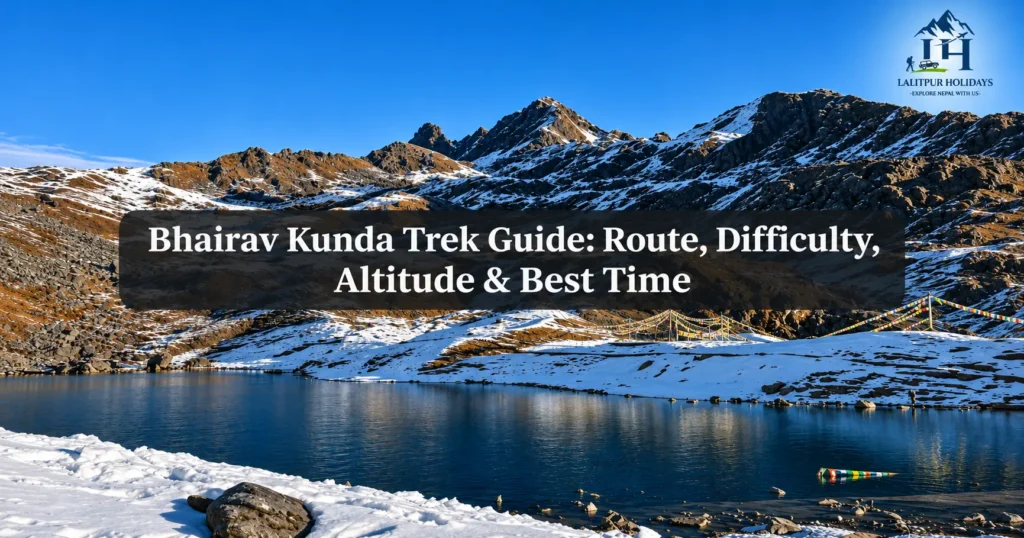
The Bhairav Kunda trek guide from Kathmandu has two main options: a short trip that uses a Jeep to reach a higher trailhead, and a longer trek that starts lower in Sindhupalchok. The short version can fit into two days when road access allows. It involves less walking, but you reach high altitude quickly.
This guide compares the routes, walking effort, overnight stops and best times to go, so you can choose an itinerary that suits your experience and available days.
Quick Summary
- Location: Bhairav Kunda is a sacred lake in Bhotekoshi Rural Municipality, Sindhupalchok, near the Nepal–Tibet border.
- Altitude: Bhairav Kunda is commonly listed at above 4,100 m, although published local sources report slightly different elevations.
- Two route styles: A short Jeep-assisted trip and a longer traditional trek are different journeys.
- Short is not always easy: Fewer walking days can mean faster altitude gain and a tighter schedule.
- Check before you go: Road access, weather, snow and permit rules can change the route.
Bhairav Kunda Trek at a Glance
| Factor | Practical Answer |
| Location | Sindhupalchok District, Bagmati Province, Nepal |
| Altitude | The lake is above 4,100 m. Published elevation figures vary. |
| Main route styles | Short Jeep-assisted route and traditional multi-day trek |
| Typical duration range | From 1 night/2 days to 10+ days, depending on the starting point |
| Difficulty | Moderate to challenging. It depends on route, ascent speed and weather |
| Best-known seasons | Spring (March–May) and autumn (September–November) |
| Accommodation | Basic lodges at lower road-accessible points. Facilities get simpler higher up |
| Main travel purpose | Trekking and pilgrimage |
Where Is Bhairav Kunda and Why Is It Significant?
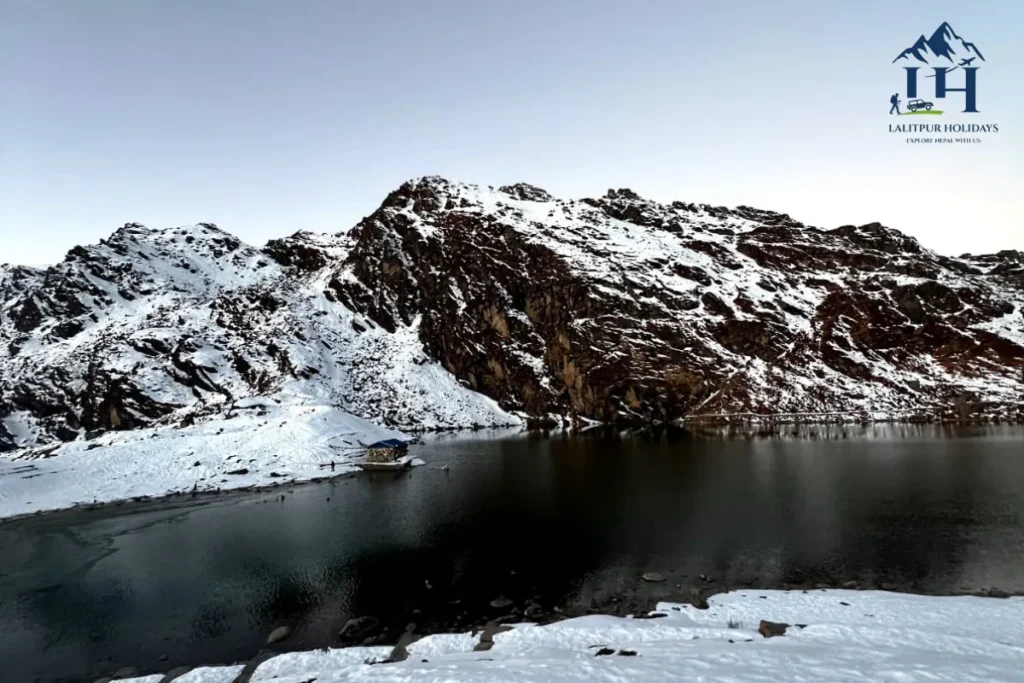
Bhairav Kunda sits in Bhotekoshi Rural Municipality in northern Sindhupalchok, close to the Nepal–Tibet border. It is a high-altitude lake. Both Hindu and Buddhist visitors consider it sacred.
Local belief links the lake to Bhairav, a fierce form of Lord Shiva. Because of this, people come for prayer as well as for the walk. Some pilgrims perform rituals at the water.
The biggest gathering happens on Janai Purnima, the full-moon festival in the Nepali month of Shrawan. It usually falls in late July or August. A large fair takes place at the lake, and thousands of devotees may attend.
This matters for planning. During the festival, trails and roads are busier, and lodging near the road can fill up quickly. On a normal trekking day, the same route may feel quiet. So decide early whether you want the festival atmosphere or a calmer visit.
Once you know what makes the lake special, the next question is why trip lengths look so different online.
Why Do Bhairav Kunda Trek Itineraries Vary in Length?
Itineraries differ because they use different road access points. Each one covers a different portion of the traditional walking route.
A road that reaches higher means fewer days on foot. A road that stops lower means more days on foot. So the duration, the walking distance and the altitude gain all follow from where you start walking.
Short Jeep-Assisted Bhairav Kunda Trek
Lalitpur Holidays’ published two-day itinerary runs from Kathmandu via Dolalghat and Bahrabise to Bagam. From Bagam, a local vehicle continues to the trailhead. Chokar Mokar may be used as an alternative approach if conditions change.
On the published Lalitpur Holidays itinerary, the local Bolero transfer from Bagam to the trailhead is separate from the main package. Confirm the transfer and the exact point where you’ll start walking before booking.
The walking section is short. However, you reach a high trailhead quickly, so the altitude gain is compressed. The schedule is also tight. It usually includes a pre-dawn start, a rough mountain road and a steady climb.
Traditional Multi-Day Bhairav Kunda Trek
Traditional routes start lower and cover more ground on foot. Local reporting describes about one and a half to two days of walking from Larcha to the lake, while Visit Sindhupalchok describes a 7–10-day trek. Check whether a quoted duration covers the walk to the lake or the full trip.
Jeep-Assisted vs Traditional Route
| Factor | Jeep-Assisted Route | Traditional Route |
| Road access | Road goes much farther up | Road stops lower |
| Walking days | Fewer | More |
| Ascent pace | Can be rapid after the drive | Depends on the overnight stops |
| Trekking experience | Short final climb | Full multi-day trail |
| Accommodation/logistics | Simpler | More complex |
| Best suited for | Travellers with limited time | Travellers who want trail days |
Neither route is better for everyone. They answer different needs.
What Is the Bhairav Kunda Trek Route?
There is no single Bhairav Kunda trek route. Instead, there are route styles. Each starts walking at a different point.
Short route: Kathmandu → Sindhupalchok road corridor → Bagam (or Chokar Mokar, if conditions require) → upper trailhead → Bhairav Kunda.
On this route, travellers usually spend a night near Bagam. The next morning, they travel by vehicle to the upper access point. From there, they climb on foot to the lake.
Traditional route: Kathmandu → lower Sindhupalchok trailhead → villages → forest and highland stages → Bhairav Kunda.
The exact starting point varies. For example, some guides begin near Larcha on the Arniko Highway. Others start lower and add more days.
Because the road network keeps changing, always confirm two things before booking. First, ask for the current roadhead. Second, ask where walking actually begins. Without those two answers, a Bhairav Kunda trek map or route name can mislead you.
Once the route styles are clear, the next question is how each journey begins in Kathmandu.
How Do You Reach Bhairav Kunda from Kathmandu?
You reach Bhairav Kunda by road from Kathmandu into Sindhupalchok, then by a final trekking section. The road part ends at a roadhead. The roadhead changes with the route.
Here is the usual pattern. First, you leave Kathmandu on the highway toward Dolalghat and Barhabise. After that, the road narrows and becomes rougher as you climb toward Bagam. From there, a short-route trip continues by vehicle to the upper access point. A traditional trip may leave the road much lower and begin walking earlier.
There is no single Kathmandu-to-Bhairav-Kunda distance unless you name the final roadhead or trailhead. For example, “distance to Bagam” and “distance to the lake” are different numbers. A road kilometre and a trekking kilometre also feel very different, because a rough mountain road is slow and tiring.
So do not compare distances from different websites without checking their endpoints. Instead, ask three questions. Where does the vehicle stop? How many hours will I walk? How much height will I climb after that?
Can Bhairav Kunda be done in 2 days?
The Bhairav Kunda trek can take anywhere from 2 days to 10 or more. The answer depends on the route you choose.
- 1 night / 2 days: This works for a compressed Jeep-assisted trip. You drive from Kathmandu, sleep near the road, then climb early the next day.
- 3 to 5 days: These versions add more walking or more rest time. As a result, they give you more room to adjust to height and handle weather delays.
- Traditional routes: These can run a week or longer, because they cover more of the trail from a lower start.
A two-day itinerary may look easy on paper because the walking distance is short. In practice, the early start, rough road and fast climb toward 4,250 m can still make it demanding.
The number of days tells you how compressed the journey is. It does not tell you how easy it will feel.
Short duration usually means less walking. However, it can also mean faster altitude gain. That is why the next section looks at difficulty more carefully.
How Difficult Is the Bhairav Kunda Trek?
The Bhairav Kunda trek is moderate to challenging, but the label changes with the route. Difficulty comes from altitude, ascent speed, walking hours, terrain, road fatigue, weather and route choice together.
Duration alone still does not tell you how demanding the trek will feel. Compare the two styles:
Short Jeep-assisted route: less walking, faster ascent, compressed schedule.
Traditional route: more walking, greater total effort, usually more gradual altitude progression.
Five hours in a Jeep and five hours on a trail are not the same kind of effort. A long, bumpy ride can leave you tired before the climb starts. Meanwhile, a traditional trek makes you tired in a different way, through many days of walking. Neither is automatically easier.
Terrain and weather add more. The final climb can be steep. Cold wind, rain or snow can slow you down. Therefore, the same route can feel mild in clear spring weather and tough after snowfall.
Can Beginners Do the Bhairav Kunda Trek?
Beginners with reasonable fitness may manage some versions of the trek. However, route choice, altitude gain, weather and daily walking time matter more than the “beginner” label.
The trek does not need technical climbing skills. Still, it reaches about 4,250 m. If you have never walked at height, a short Jeep-assisted trip can feel sharp because the climb comes quickly. If you have hiked before and enjoy long days, you will likely cope better. When unsure, choose a gentler pace and tell your guide how you feel along the way.
Bhairav Kunda Altitude and Why It Matters
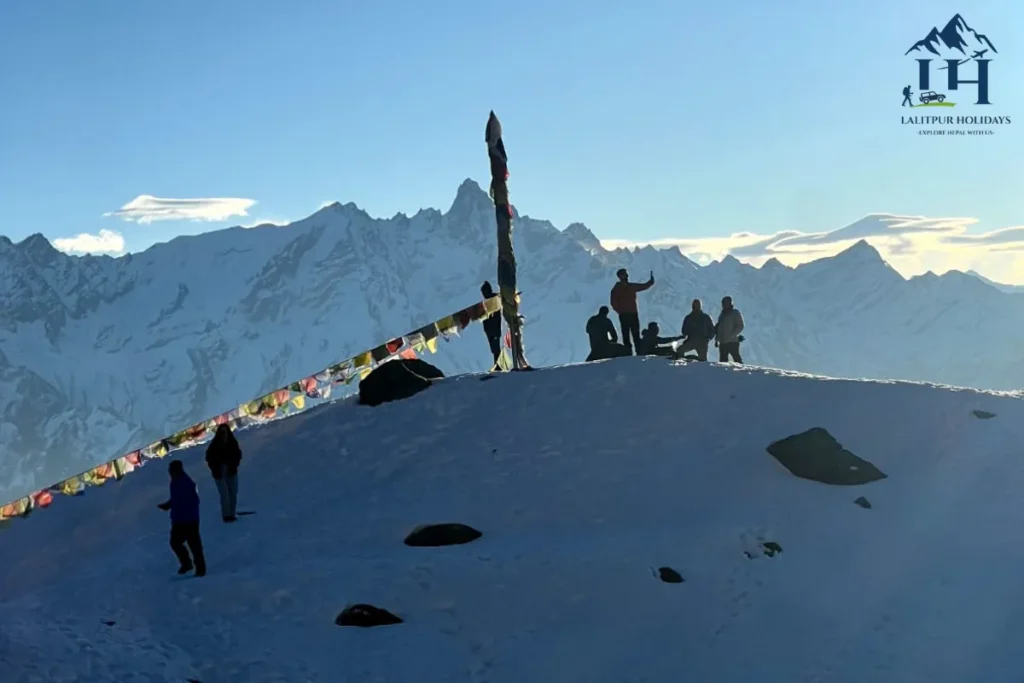
Bhairav Kunda sits at above 4,100 m. Much of the trek’s difficulty comes from elevation, especially on the shorter route. A road can reduce walking distance, but it cannot reduce the elevation of the lake.
Altitude affects pace first. Next, it affects sleep and energy. Then it affects how hard the climb feels. Because the air is thinner, even an easy gradient can feel slow.
For planning, check these points:
- how quickly the itinerary gains height;
- the highest point where you will sleep;
- how early you will start climbing;
- whether you have spare time if you need to slow down.
This is trip planning, not medical advice. If you have a health condition, speak with a doctor before travelling to high places.
Altitude is only one variable. Weather can change the same route considerably from one season to another.
What Is the Best Time for the Bhairav Kunda Trek?
The best times for the Bhairav Kunda trek are spring and autumn. For Bhairav Kunda, season affects more than mountain views. It can change the road access, final trailhead and difficulty of the upper route.
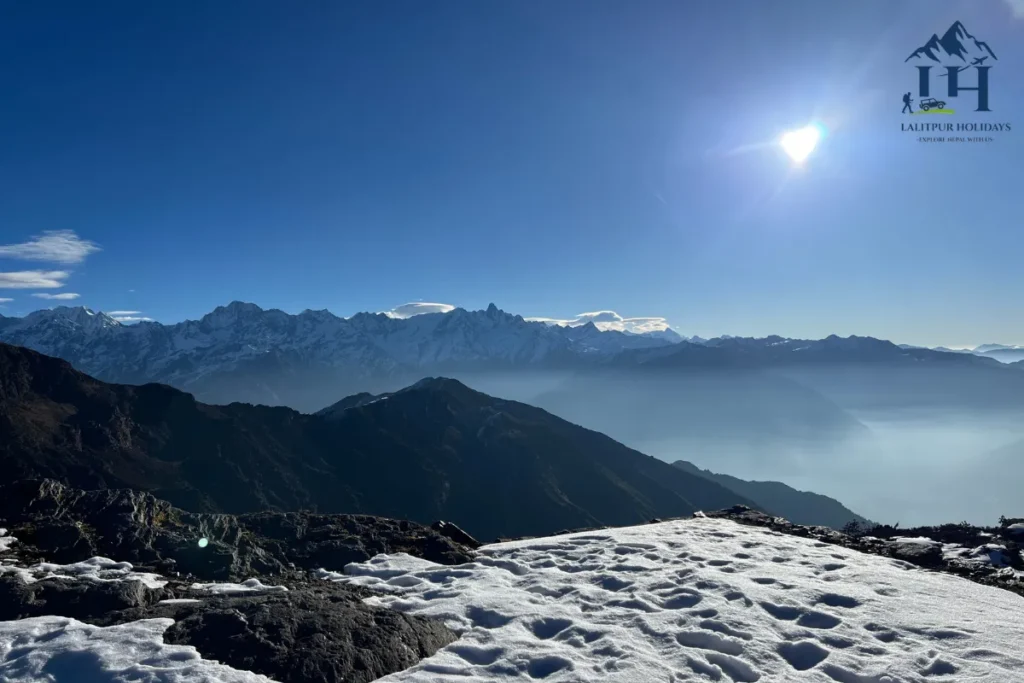
Spring (March–May): Temperatures are milder and trails are usually drier. Views can be good, though haze sometimes builds late in the season. Snow can still appear. Local news has reported fresh snowfall at the lake as late as April.
Autumn (September–November): Skies are generally clearer, and roads and trails tend to be more reliable. Because this is a popular trekking season, expect more visitors.
Monsoon (June–September): Rain can damage the mountain road and trigger landslides. Trails get slippery. Janai Purnima falls in this period, so you may meet large pilgrim crowds in wet weather.
Winter (December–February): Snow and ice can cover the upper ground. It is cold, and road access may be limited. The scenery can look striking, but the climb becomes harder and less predictable.
Check conditions a few days before departure. Weather and road reports change fast in the hills. Once the route and season are chosen, overnight arrangements become the next practical question.
Where Do You Stay on the Bhairav Kunda Trek?
Where you stay depends on your route. There is no continuous teahouse chain like on some famous trails.
Short Jeep-assisted route: Travellers usually stay at a simple local lodge in a lower road-accessible settlement such as Bagam. Rooms are basic, and group sharing is common.
Upper sections: Facilities get thinner as you climb. Expect very limited services near the lake, so carry water and snacks.
Traditional route: Options vary by stage. Depending on the route, you may find village lodges, homestays or camping.
Because capacity is small, beds can run out. This is especially true around Janai Purnima. So confirm your accommodation before leaving Kathmandu, and ask what happens if the road is blocked.
Do You Need a Permit for the Bhairav Kunda Trek?
Permit requirements should be checked against the exact route you plan to use. Bhairav Kunda can be approached through different roadheads and trekking routes, and current online sources give conflicting permit information.
Confirm the latest requirement with the relevant conservation authority or your operator before departure.
So check these before you travel:
- your exact trailhead and route;
- whether any part of the route enters a protected area;
- whether the local municipality asks for an entry fee or registration;
- the latest TIMS rules from official Nepal tourism sources.
Ask your operator to name the permit and the issuing office in writing. Do not rely on a competitor page or a search snippet for this decision.
What Is the Trail and Terrain Like?
The terrain changes quickly from road to trail. The route may feel easy while you are still in the Jeep, then change quickly once the final climb begins.
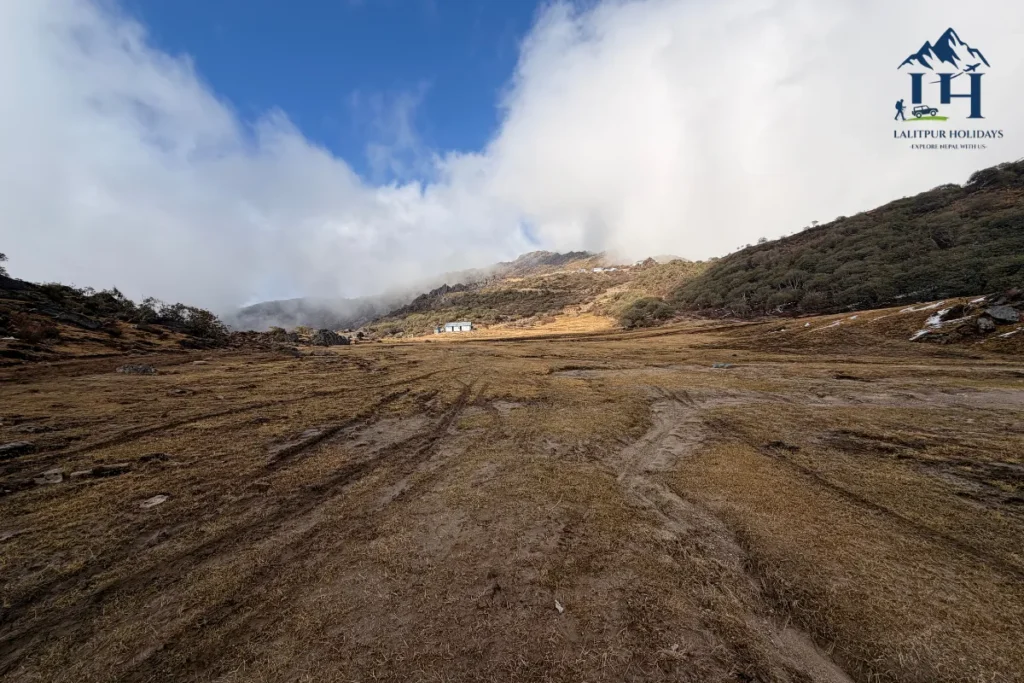
First comes the road. Beyond the main highway, it turns rough and dusty, and it can turn muddy after rain. Four-wheel-drive vehicles are common here. Then the trail begins. Lower sections may pass through forest. Higher up, the ground opens into rocky, grassy highland.
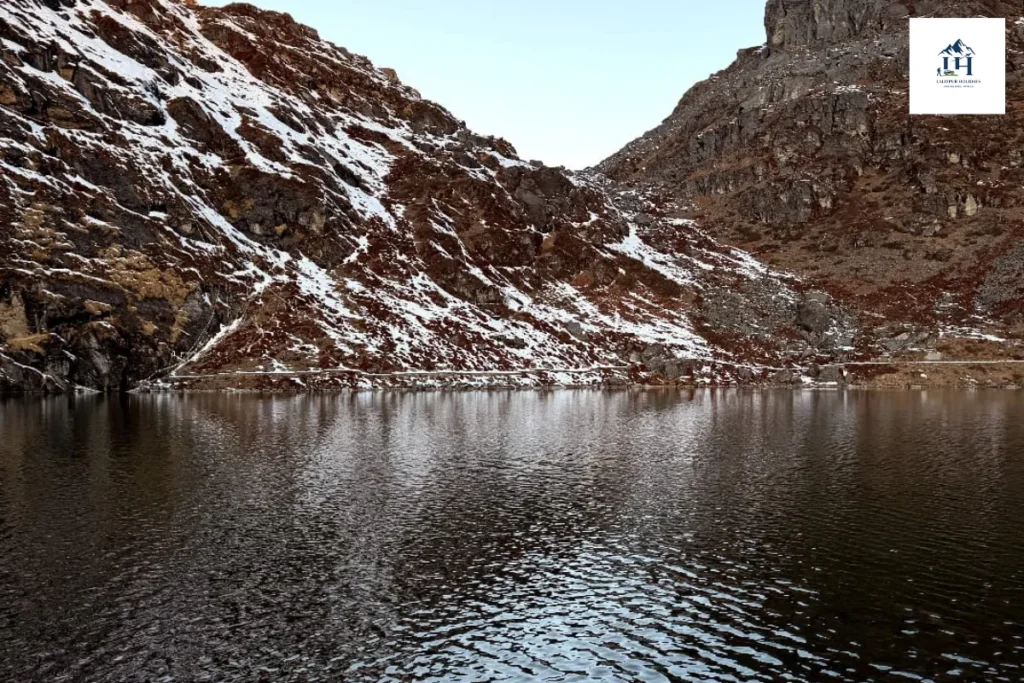
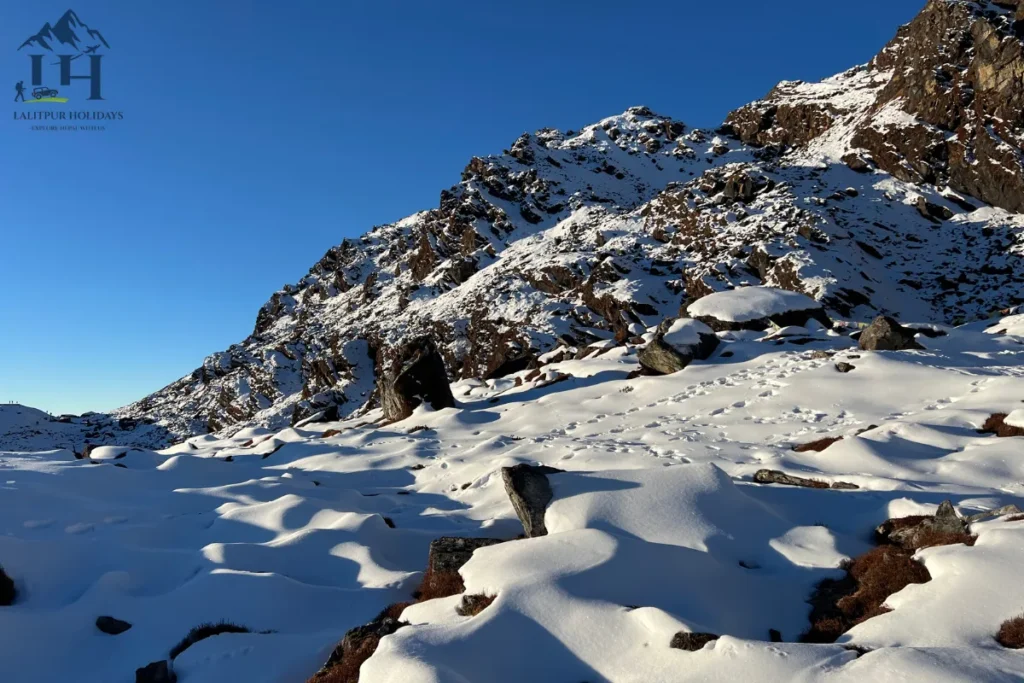
The last stretch is steep. It can also be windy and cold, even on a sunny day. In winter or early spring, snow and ice may cover parts of the path, which makes footing slower.
Trail conditions vary by season and by recent weather. Ask your guide for the latest report, and keep your pace steady rather than fast.
Bhairav Kunda as a Trek and Pilgrimage
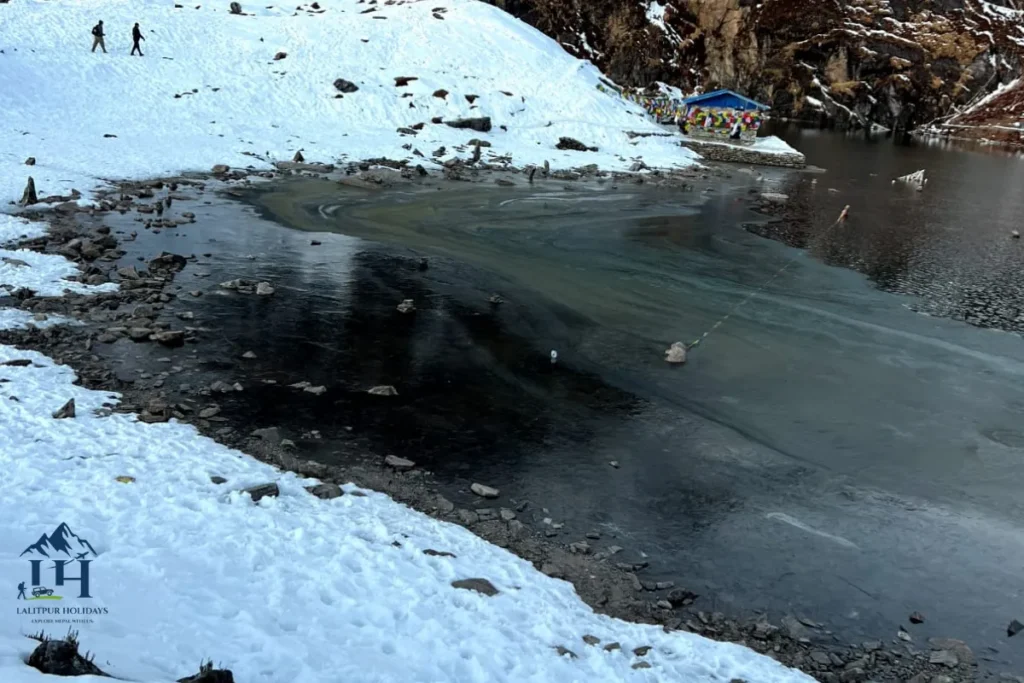
Bhairav Kunda functions as both a pilgrimage site and a trekking destination. Local belief ties the lake to Bhairav, a fierce form of Shiva, and visitors from both Hindu and Buddhist traditions respect the site.
Janai Purnima is the main date. Local reports describe a fair with thousands of devotees, and some accounts mention jhankri (traditional healer) dances. Many people go to pray and bathe at the water.
This changes your trek in practical ways. First, more visitors mean busier trails. Second, lodging near the road fills up. Third, the pace slows when many people use the same narrow path. Also, the festival falls in the rainy season, so expect wet conditions.
If you want quiet, avoid the festival days. If you want to join the fair, book early and plan for crowds. Check the exact Janai Purnima date for your year, because it follows the lunar calendar.
What Should You Pack for Bhairav Kunda?
Pack for cold, wind and an early start. Skip the extras. Each item below earns its space.
- Layered clothing: High altitude is cold, even when the road section feels mild.
- Waterproof outer layer: Rain and wind can arrive suddenly.
- Trekking shoes: The final climb is steep, and the ground can be wet or icy.
- Hat and gloves: Mornings at the lake are cold.
- Trekking poles: They take pressure off your knees on steep ground.
- Headlamp with spare batteries: Short itineraries often start before sunrise.
- Water and snacks: Upper facilities are basic, so carry your own.
- Sun protection: Sunlight is strong at height and reflects off snow.
- Personal medication: You cannot buy it on the trail.
- Sleeping bag: Bring one only if your route or lodge asks for it.
Who Is the Bhairav Kunda Trek Best Suited For?
The trek suits some travellers more than others. This table shows what each person should think about.
| Traveller | What to Consider |
| Limited-time hiker | A short Jeep-assisted route may fit, if you accept a fast climb and early start |
| Trek-focused traveller | A traditional route gives more trail days and a slower build-up |
| Pilgrim | Plan around the festival dates and book lodging early |
| Beginner | It may be possible, depending on route, fitness and how you handle altitude |
| Experienced trekker | A traditional route may feel more rewarding |
| Traveller uncomfortable with altitude | Needs careful assessment before choosing a fast route |
A trekker who wants quiet trail days may prefer the traditional route. Someone with only a weekend may care more about road access and the final hiking section.
How Is Bhairav Kunda Different from Panch Pokhari or Gosaikunda?
Bhairav Kunda, Panch Pokhari and Gosaikunda are separate trips. Each has its own route network, access and pilgrimage tradition.
Bhairav Kunda has distinct Sindhupalchok routes, including a short road-assisted option. Gosaikunda lies in the Langtang area, and treks to it usually start from Dhunche or Sundarijal. Panch Pokhari is a five-lake trek with its own approach and longer itineraries. Duration, access roads and lodging differ across all three.
Because of this, a trip that suits one lake may not suit another. Each deserves its own detailed comparison, so check route and altitude details for each before choosing.
What Should You Check Before Choosing a Bhairav Kunda Route?
Check these points before you book. Experienced trek planners ask the same questions.
- Current roadhead: Where does the vehicle stop this season?
- Exact trailhead: Where does walking begin?
- Walking hours: How long is the climb, and how long is the return?
- Ascent: How much height do you gain each day?
- Highest overnight point: Where will you sleep at the highest?
- Road condition: Has recent rain or landslide damage affected the route?
- Trail and snow condition: Is the upper path clear?
- Accommodation: Are beds confirmed?
- Permits: Which permits apply to your route?
- Weather: What does the forecast say for the days of your trip?
- Janai Purnima timing: Does your date fall near the festival?
- Backup route: What is the plan if the main road is closed?
Frequently Asked Questions About the Bhairav Kunda Trek
How many days does the Bhairav Kunda Trek take?
There is no single duration, because the trek can begin from different roadheads. A Jeep-assisted route can be done in about two days. Traditional routes add several walking stages and can take a week or more.
Can Bhairav Kunda be done in 2 days?
Yes, a 1 night/2 days trip is possible with Jeep access toward Bagam and an early-morning climb. However, it is a compressed schedule with a long road journey and a fast gain in height. Confirm the plan with your operator.
How difficult is the Bhairav Kunda Trek?
The trek is moderate to challenging, depending on the route. Short routes mean less walking but faster altitude gain. Traditional routes mean more walking days. Weather, snow and your own fitness also change how hard it feels.
What is the altitude of Bhairav Kunda?
Bhairav Kunda is at above 4,100 m; published figures vary.
Can beginners do the Bhairav Kunda Trek?
Some beginners may manage it if they have reasonable fitness. The route you choose matters more than the label. A fast Jeep-assisted climb is demanding at altitude, so go slowly and listen to your guide.
How do you reach Bhairav Kunda from Kathmandu?
You drive from Kathmandu into Sindhupalchok by road, then continue to a route-specific roadhead. After that, you walk to the lake. Short routes use roads toward Bagam, while traditional routes begin walking from a lower point.
Do you need a permit for Bhairav Kunda?
Before booking, confirm the permit and guide requirements for your exact route and nationality. Check the Nepal Tourism Board’s TIMS guidance and ask your operator which permits or local registrations apply, who issues them and whether they are included.
Is camping required?
No, camping is not required on every route. Short Jeep-assisted trips usually use a local lodge. Some traditional itineraries may use camping or homestays. Ask your operator which option applies to your dates.
Which Bhairav Kunda Route Should You Choose?
Start with your available days. If you can spare a week or more, a traditional route opens up.
Next, think about road access, because the roadhead sets your walking distance. Then consider your walking preference. Do you enjoy long trail days, or would you rather limit them? After that, think about altitude progression and season, since snow or rain can change both road and trail.
If time is limited, a Jeep-assisted route reduces walking days but creates a more compressed high-altitude journey. A traditional route suits travellers who want more trail time and a fuller trekking experience.
Road access can change, so keep your plan flexible. Travellers who want Lalitpur Holidays’ current short-route arrangement can review the Bhairav Kunda Trek package for the latest operating route, departure information and inclusions.
Trek information last reviewed: November 2026. Road access, trail conditions, accommodation and permit requirements can change, so confirm current conditions before departure.
Useful Resources
- Visit Sindhupalchok: Bhairav Kunda — Lake information and an overview of the longer trek.
- Nepal Tourism Board: TIMS Guidance — Official guidance to consult when checking requirements for your exact route.
- CDC: High-Altitude Travel Guidance — How to plan a gradual ascent and recognise altitude illness.
